
WELCOME BONUS 300%
UP TO €2000 + 100
FREE SPINS
UP TO €2000 + 100
FREE SPINS
Home → Blackjack
Blackjack at Playcroco Casino: Variants, Rules and Payouts
Card Counting at Shuffle Master Table: why it fails
The Quantum Blackjack Plus Live table from Playtech operates with continuous shuffling mechanisms that eliminate the advantage of tracking card sequences for high rollers. This technology ensures that every hand is dealt from a freshly shuffled deck, rendering traditional counting methods ineffective regardless of player skill level. Consequently, bettors cannot adjust their stakes based on favorable remaining cards, removing a key tool used by professional gamblers to gain an edge over the house.
Quantum-Multiplikatoren bis 1.000x auf 3 Karten-Kombis (21 Punkte) introduce volatility that further disrupts any statistical prediction models relying on past outcomes. These multipliers apply randomly to winning hands, creating unpredictable payout spikes that do not correlate with the density of high-value cards left in the shoe. High stakes players must accept this randomness as a fixed cost of playing live dealer games with enhanced bonus features instead of pure strategy-based returns.
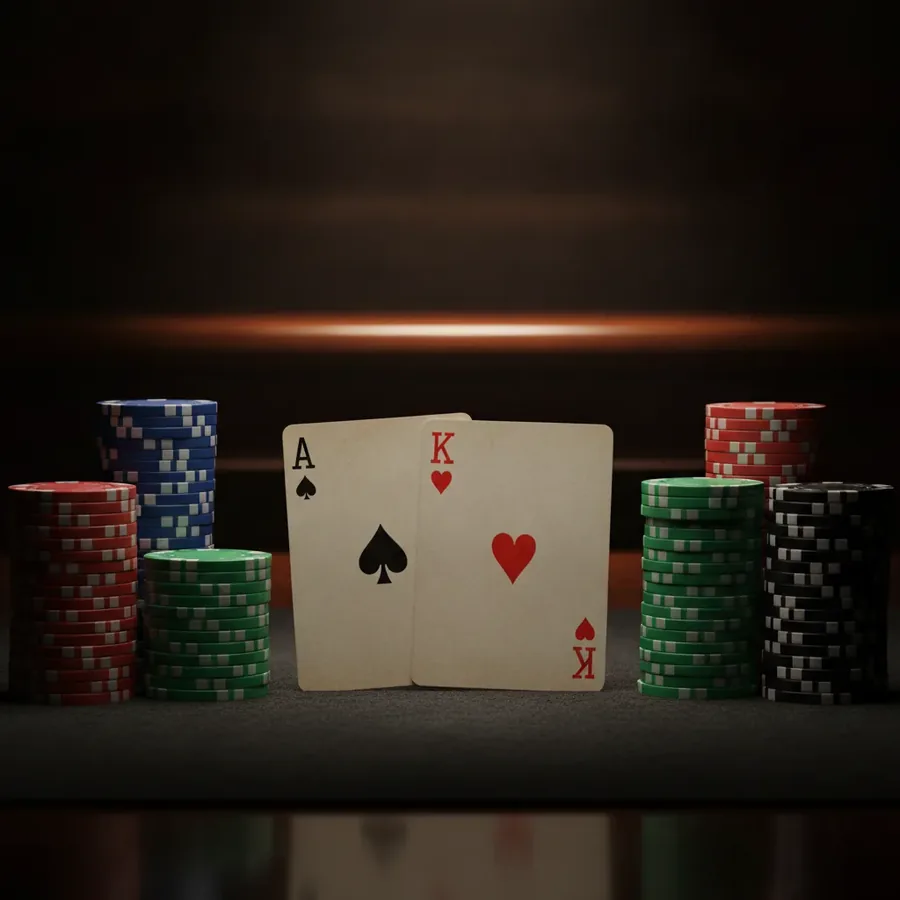
Bonus conditions often exclude Blackjack completely
The 300% welcome bonus up to €2,000 plus 100 free spins imposes strict contribution rates that significantly hinder high roller progression through wagering requirements. Tischspiele contribute only 10% to the turnover target, meaning every hundred euros wagered counts merely as ten euros toward clearing the bonus funds. This structural disadvantage forces players who prefer card games to either switch to slots or accept much longer periods before accessing their own deposited capital.
Six Card Charlie Pays Immediately with Six Cards
A six-card hand totaling twenty-one or less triggers an automatic win in specific variants, though standard tables at Playcroco Casino typically follow established rule sets without this feature. Most available options like Infinite Blackjack from Evolution focus on unlimited seating and side bets rather than special six-card payout rules for regular gameplay. High rollers seeking this specific mechanic should verify individual game rules before placing significant stakes, as it remains a niche exception rather than a standard offering.
Soft Hand and Hard Hand Practically Distinguished
A soft hand contains an Ace counted as eleven, allowing flexibility in hitting without immediate bust risk, whereas a hard hand lacks this protective buffer. In Blackjack Ein Deck with RTP 99.85%, understanding this distinction is crucial for applying the correct basisstrategie to minimize the Hausvorteil of 0.15%. Players must recognize when an Ace provides a cushion against dealer strength, enabling aggressive plays like doubling down that would be disastrous with a hard total.
What Push Means: Stake Returns to You
A push occurs when the player and dealer finish with identical hand values, resulting in the original stake being returned without profit or loss. In games featuring Late Surrender, players may forfeit half their bet before seeing the dealer's hole card, avoiding a push scenario entirely under certain conditions. This option reduces the Hausvorteil by approximately 0.08 Prozentpunkte, offering a strategic escape route that preserves capital during unfavorable starting distributions compared to waiting for a tie outcome.
Blackjack variants at a glance
| Variant | Payout | House edge | Rule | Bet range |
|---|---|---|---|---|
| Blackjack 6 Decks, S17, DAS, DOA, Auszahlung 3:2, Basisstrategie | 99.54% | 0.46% | Dealer steht auf Soft 17; Verdopplung auf jeder Zweierkarte; Verdopplung nach Split erlaubt; keine Aufgabe. Basisstrategie ist für diesen Wert zwingend | Blackjack 3:2, normaler Gewinn 1:1, Insurance 2:1 |
| Blackjack Liberal Vegas Strip (liberale Regeln, 3:2) | 99.72% | 0.28% | Günstigste Regelkombination: S17 + DAS + Resplit + Late Surrender. Standardabweichung 1,15 | Blackjack 3:2, Gewinn 1:1 |
| Blackjack Split / Double / H17 – Regel-Effekte | n.a. (Regel-Modifikatoren) | H17 +0.22 Prozentpunkte; RSA −0.08 Prozentpunkte; DAS −0.14 Prozentpunkte | Dealer Hits Soft 17 verschlechtert RTP um 0.22 Prozentpunkte; Resplit Aces verbessert um 0.08 Prozentpunkte; Double After Split verbessert um ca. 0.14 Prozentpunkte; 6 Decks statt 8 – ca. 0.02 Prozentpunkte. | Double – Einsatz ×2 mit einer Karte; Split – bis 4 Hände; Ass-Split meist mit einer Karte. |
| Blackjack Auszahlung 6:5 statt 3:2 (6 Decks) | 98.15% | 1.85% | Ersatz von 3:2 durch 6:5 fügt exakt +1.39 Prozentpunkte zum Vorteil des Casinos hinzu – stärker als jede andere Regeländerung. Bei $10 Einsatz zahlt Blackjack $12 statt $15. | Blackjack 6:5, Gewinn 1:1 |
| Blackjack Ein Deck, klassische Regeln, 3:2 | 99.85% | 0.15% | Weniger Decks = niedrigerer Vorteil; ein Deck gibt ca. −0.48 Prozentpunkte gegenüber 8 Decks. Oft durch 6:5 Auszahlung kompensiert. | Blackjack 3:2, Gewinn 1:1 |
| Blackjack Surrender (Late Surrender) – Regel-Effekt | n.a. (Regel-Modifikator) | −0.08 Prozentpunkte | Spieler gibt Hand nach Dealer-Blackjack-Prüfung auf, verliert die Hälfte des Einsatzes. Verbessert RTP um ca. 0.08 Prozentpunkte. Early Surrender ist wesentlich wertvoller (bis −0.6 Prozentpunkte), aber extrem selten. | Rückzahlung 50% des Einsatzes |
Which hands are excluded from Surrender?
Surrender is strictly a Late Surrender mechanism, meaning the dealer first checks for their own Blackjack before any player action occurs. If the dealer holds an Ace or Ten and completes a natural Blackjack, the option to forfeit half the stake is immediately voided for all players at the table. This exclusion protects the house from losing the vig on hands that were already destined to lose regardless of further play.
The timing of this rule significantly impacts the Return to Player percentage by approximately 0.08 percentage points compared to a standard game without surrender options. Early surrender variants can offer up to -0.6 percentage points improvement but are rarely available in modern digital environments. The late variant remains a valuable tool for high rollers managing variance on marginal starting hands against strong dealer upcards.
Players cannot surrender after choosing to Hit or Stand on a hand that does not result in a bust or a dealer Blackjack. Once the decision phase passes, the hand proceeds to resolution with the full original wager at risk until the final outcome is determined. This structural limitation ensures that strategic folding only applies to the initial two-card composition before any additional cards are drawn.
Blackjack Contributes Only 10 Percent to Wagering
Tischspiele contribute only 10 percent toward the turnover requirement of the 300% welcome bonus up to €2,000 plus 100 free spins. Slots count for 100 percent, creating a massive disparity in how quickly a player can clear the bonus funds attached to their deposit. This low contribution rate forces high rollers to wager substantially more on table games to meet the same clearance threshold as slot players.
A €2,000 bonus requires €80,000 in total wagering volume if played exclusively through slots, but jumps to €800,000 if restricted to blackjack tables. The mathematical expectation of clearing such a large volume drops precipitously because every euro bet on the table only reduces the remaining requirement by ten cents. High stakes become less efficient for bonus hunting due to this severe penalty applied to low-volatility strategy-based games.
The house edge of 0.46% on the 6-deck variant further erodes the bankroll during this extended wagering period. Combining the 10% contribution with the inherent mathematical disadvantage means the expected loss approaches the entire bonus value before completion. Players seeking pure profit should avoid using bonuses on blackjack, as the terms are designed to guarantee a negative return over time.
What doesn't count as Blackjack after Split?
Splitting Aces typically restricts each new hand to receiving exactly one additional card, preventing any possibility of drawing a third card to improve the total. This rule inherently eliminates the chance of forming a multi-card 21, which would otherwise qualify for higher payout tiers or specific side bet triggers. The restriction keeps the hand value capped at 21 points with minimal flexibility for subsequent hits.
Resplitting Aces is generally prohibited, limiting the player to a maximum of two separate hands originating from the initial pair of Aces. Even if the rules allow doubling after split (DAS), the single-card limit remains the primary constraint on post-split development. This structural limitation reduces the strategic depth available to high rollers attempting to maximize returns from weak starting pairs.
Side bets like Hot 3 or Any Pair may still resolve based on the combined ranks of the split cards, but they do not alter the main game progression. A split hand resulting in a soft 17 or hard 18 follows standard hit/stand rules without the benefit of further splitting or complex multi-card combinations. The focus remains on basic strategy application rather than opportunistic expansion of the hand structure.
Why Loss Progression Quickly Reaches Table Limit
Infinite Blackjack allows unlimited seats but caps the maximum bet at 5,000 EUR per hand regardless of the number of players at the virtual table. Progressive betting systems like Martingale rely on doubling stakes after losses, but this hard ceiling abruptly halts the recovery sequence once the limit is reached. A high roller starting at a base bet will hit the 5,000 EUR wall after just a few consecutive doublings depending on the initial stake size.
Quantum Blackjack Plus Live also imposes a strict 5,000 EUR maximum bet while offering multipliers up to 1,000x on winning combinations. The presence of these volatile multipliers tempts players to increase exposure, yet the fixed upper bound prevents infinite scaling of wagers during hot streaks. This creates a asymmetry where upside potential is capped alongside downside protection, neutralizing aggressive staking strategies.
Lightning Blackjack limits stakes to 2,500 EUR, effectively halving the allowable exposure compared to the other live dealer variants mentioned. A loss progression that works within a 5,000 EUR limit fails completely here, requiring a lower starting point to survive typical variance. The lower cap makes it particularly dangerous for those employing flat-betting adjustments based on previous table experiences with higher limits.
Register Late Surrender correctly in three steps
First, verify that the dealer has not checked for a hole card Ace or Ten before initiating any surrender decision. If the dealer reveals a Blackjack, the surrender option vanishes instantly, and the full bet is collected unless insurance was previously placed. Confirming the dealer's status is the prerequisite for accessing the late surrender mechanic defined in the game rules.
Second, select the surrender icon when holding a hard 16 against a dealer 9, 10, or Ace, as statistical analysis favors forfeiting 50% over playing out the hand. The payout is exactly 50% of the original wager returned to the player balance, reducing the net loss on that specific round. This action must be taken before any hit or stand commands are issued to ensure validity.
Third, acknowledge that early surrender is unavailable, making the late variant less valuable than its theoretical maximum potential of -0.6 percentage points. The actual gain is capped at 0.08 percentage points due to the dealer's prior blackjack check. Correct registration involves recognizing these limitations and applying the move only when the expected value of playing exceeds the immediate 50% forfeiture.
RNG draws cards from virtual eight-deck shoe
The RNG engine utilizes a virtual eight-deck shoe to determine card distribution for standard Blackjack games, establishing the baseline mathematical model for all digital tables. This specific configuration serves as the reference point against which other rule variations are measured and analyzed by independent analysts for accuracy. Consequently, players must adjust their basic strategy charts to account for the increased deck count, which slightly elevates the house edge compared to single-deck scenarios.
Comparing this setup to a six-deck variant reveals a distinct difference in the house advantage, where the additional two decks add approximately 0.02 percentage points to the casino's edge. This minor increase is negligible for casual play but becomes significant for high rollers executing thousands of hands per session using optimal betting strategies. The impact on long-term retention is therefore calculated precisely within the game's theoretical return parameters over extended periods of gameplay.
High stakes players should note that resplitting Aces improves the RTP by 0.08 percentage points, offering a slight mitigation against the multi-deck disadvantage when allowed by the rules. This specific rule modifier allows for more frequent splitting actions, thereby reducing the overall house advantage below the standard baseline established by the eight-deck shoe configuration. Such nuances directly influence the expected value calculations for professional players managing substantial bankrolls at these virtual tables.
Infinite Blackjack uses the Six Card Charlie
Evolution provides the Infinite Blackjack table with a maximum bet limit of 5,000 EUR, catering specifically to high rollers seeking elevated wagering opportunities on live dealer platforms. This game features unlimited seats at the table, ensuring that VIP players never face seat restrictions regardless of the number of concurrent participants joining the stream. The provider guarantees continuous action without waiting times, allowing serious players to maintain their betting rhythm and volume throughout extended playing sessions.
The game offers an RTP of 99.47% when played with optimal strategy, which stands as a highly competitive figure compared to many other live blackjack variants available in the market. This percentage reflects the theoretical return over hundreds of thousands of hands, providing a clear metric for analytical comparison against other Evolution titles like Lightning Blackjack. Players relying on mathematical precision will find this transparency essential for evaluating the long-term profitability of their chosen betting systems.
Four side bets including Any Pair, 21+3, Hot 3, and Bust It are available alongside the main game, each carrying its own distinct house edge and payout structure. These optional wagers allow players to diversify their risk exposure while maintaining their primary strategic focus on the main hand outcome. The inclusion of these bets increases the overall volatility of the session, requiring careful bankroll management to sustain play during unfavorable variance periods.
No Double Down on three cards
Standard Blackjack Split rules permit doubling only after receiving exactly one additional card, restricting the aggressive expansion of bets on potentially strong two-card totals. This limitation forces players to rely on splitting rather than doubling when holding four or more cards, fundamentally altering the optimal decision matrix for certain hard hands. High rollers must adjust their betting sequences accordingly, accepting reduced upside potential on complex multi-card combinations that would otherwise justify higher wagers.
Double After Split remains permitted, allowing players to double down on hands created through the splitting process, which improves the overall RTP by approximately 0.14 percentage points. This specific rule benefit partially offsets the restriction on three-card doublings, providing a strategic avenue for maximizing returns on split pairs that receive favorable subsequent cards. Analytical models confirm that this allowance significantly enhances the player's expected value compared to tables prohibiting post-split doubling actions entirely.
Resplitting Aces further enhances the player's position by improving the RTP by 0.08 percentage points, offering additional opportunities to capitalize on weak starting hands involving aces. This rule modifier allows for multiple splits beyond the initial pair, effectively increasing the number of active hands and the total amount wagered per round. Such flexibility is crucial for high-volume players who utilize statistical advantages to mitigate the inherent house edge present in every blackjack variant.
Continuous Shuffling Machine shuffles after each round
Quantum Blackjack Plus Live by Playtech operates with a maximum bet of 5,000 EUR, utilizing quantum multipliers up to 1,000x on three-card combinations totaling twenty-one points. This technology ensures rapid card turnover and eliminates traditional shuffle delays, maintaining a fast-paced environment suitable for high-frequency betting strategies employed by professional gamblers. The integration of random multipliers adds significant variance, requiring players to manage their bankrolls carefully to withstand potential losing streaks between multiplier hits.
Lightning Blackjack by Evolution caps bets at 2,500 EUR while offering lightning multipliers up to 25x on winning hands, creating a dynamic risk-reward profile distinct from standard tables. This provider also supports unlimited players, ensuring that high rollers can always join a table regardless of current occupancy levels during peak hours. The RTP of 99.56% remains consistent with optimal play, though the multiplier events introduce short-term volatility that deviates from the long-term theoretical average.
Card counting strategies become ineffective due to the continuous reshuffling mechanism, preventing players from gaining a persistent edge through tracking card composition changes over time. This operational constraint forces reliance on pure basic strategy and disciplined bankroll management, as predictive algorithms cannot accurately forecast future card distributions in real-time. Consequently, the house edge remains fixed according to the published rules, eliminating any possibility of skill-based advantage play despite advanced analytical techniques.
How long does a Live Blackjack round take?
Blackjack Surrender allows players to forfeit half their bet after the dealer checks for blackjack, improving the RTP by approximately 0.08 percentage points through this risk reduction mechanism. Late surrender occurs only after the dealer verifies they do not have blackjack, protecting players from losing their entire stake when facing an immediate dealer win. This rule feature provides a valuable exit option for marginal hands, effectively lowering the overall house edge compared to tables prohibiting any form of surrender.
Insurance bets pay 2:1 when the dealer shows an ace, but carry a house edge of 7.47% for six to eight deck games, making them statistically unfavorable for most players. Basic strategy dictates always declining insurance unless the true count reaches +3 or higher, a condition rarely met in standard play without extensive card counting experience. High rollers avoiding this side bet preserve their expected value, as the negative expectation of insurance rapidly erodes profits over numerous hands dealt at live tables.
Tischspiele contribute only 10% toward bonus wagering requirements, meaning a €2,000 welcome bonus requires €20,000 in blackjack turnover compared to €2,000 for slots contributing 100%. This severe penalty makes blackjack unsuitable for clearing large bonuses efficiently, forcing high rollers to either accept slow progress or abandon the game for faster-contributing alternatives. Strategic planning must account for this disparity, as attempting to clear substantial bonus funds through low-contribution table games results in disproportionately high expected losses.
Contact
Live - online chat
Banking





Providers








Playcroco Casino 2026